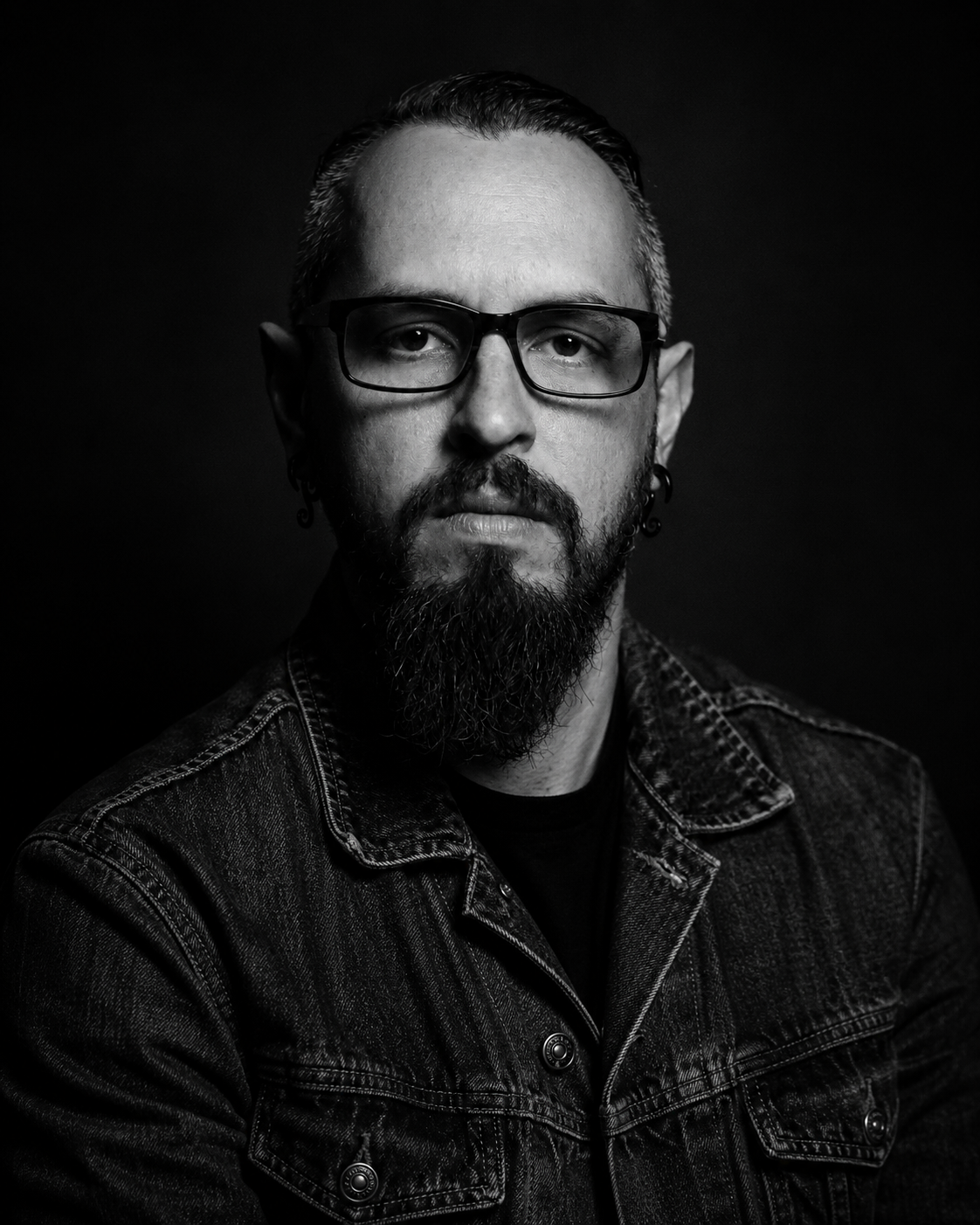
FOUNDER’S LOGBOOK
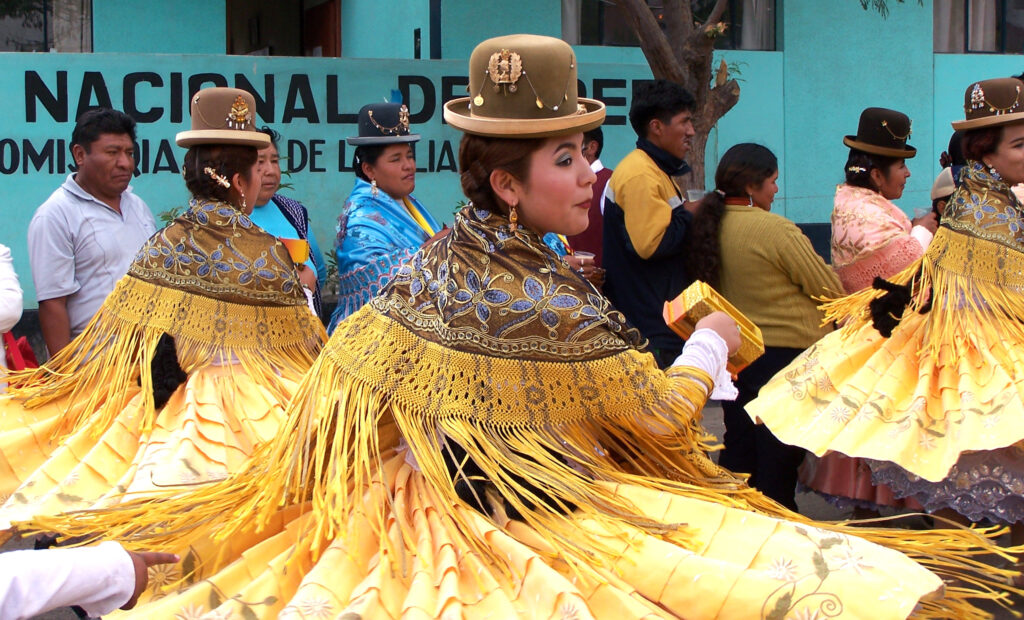
Chapter I — The Camera as a Passport
I don’t remember deciding to become a photographer. Photography was simply there from the very beginning.
I was six years old when I first held a camera in my hands. It was a Halina Roy 127 that belonged to my mother. At that moment, I had no idea that this small object would accompany me for a large part of my life, nor that it would eventually take me across continents, introduce me to different cultures, and help me build a particular way of understanding the world.
During my teenage years, the camera found its first natural territory in Buenos Aires’ underground music scene. While many sought to capture the spectacle on stage, I was drawn to what happened around it: the rehearsals, the dressing rooms, the conversations, the gestures that never reached the audience. It was there that I understood that a photograph could tell much more than what appeared in front of the lens.
That pursuit led me to the Prilidiano Pueyrredón National School of Fine Arts, where I earned a Bachelor’s degree in Visual Arts with a specialization in Visual Language and Aesthetics, as well as a teaching degree in Woodcut Printmaking. More than learning techniques, I discovered that every image is a cultural construction, and that art constitutes a language capable of explaining an era.
Upon finishing my studies, an unexpected opportunity arose: a contract with the Bureau of Arts in Melbourne, Australia. For a year, I participated in editorial projects, developing graphic design, book mockups, and documentary photography on the Australian territory. Many of those images would later form part of tourist publications seeking to showcase a continent as vast as it was diverse.
Australia taught me that traveling is not merely about moving between countries. It means learning to see in a different way.
That learning continued in Barcelona.
I joined Bassat Ogilvy as a photography assistant and, over time, moved on to join photographic production teams and scouting for fashion runways. Daily proximity to models, designers, and creative teams allowed me to develop a gaze based on trust and respect for the person behind the image. That experience would later open doors to collaborate on productions linked to international brands such as Victoria’s Secret, Bordelle, and other fashion and lingerie labels.
At the same time, Barcelona awakened another vocation that would end up accompanying me for many years: the art market.
I began working as an art dealer, bringing the work of Argentine painters, engravers, and sculptors to Spain. Each exhibition was much more than a commercial transaction; it was an exercise in cultural diplomacy. I discovered that a work of art could travel thousands of miles and still speak the same language to whoever was willing to contemplate it.
Those years were also marked by commissions for campaigns and productions for companies such as SEAT, Cinzano, Freixenet, Alexander McQueen, Chanel, and Carolina Herrera. In parallel, I began my first documentary photography assignments for L’Óvarie magazine, where I rediscovered the pleasure of observing reality without the constraints of advertising.
Over time, I came to understand that photography was never merely a profession.
It was my passport.
A shared language.
The tool that allowed me to enter completely different worlds and discover that, behind every story, there is always another story waiting to be told.
Chapter II — The Language of Markets
There is a widespread idea that art and finance belong to opposing universes. For years, I heard that economics was the territory of numbers and that culture was the territory of sensibility. Yet my experience ultimately proved that there is a very solid bridge between both worlds.
After graduating as an economist from the University of São Paulo (USP), I began a new phase dedicated to international business development. I started by advising large Brazilian companies in the building materials sector, supporting their expansion processes into new markets and understanding how production chains, logistics, and international trade can transform regional economies.
In 2007, I traveled for the first time to Foshan, China. That trip marked a turning point. We opened an office to strengthen the link between Latin America and Asia, and from there began years of work in sectors as diverse as industry, renewable energies, waste-to-energy technologies, photovoltaic energy, and tidal energy.
It was in that context that I took on the representation of White Westinghouse Plasma Corp in Peru, Argentina, and Uruguay. At first, I thought the challenge consisted of commercializing technology and training technical teams. Over time, I understood that the real work was something else: making projects viable.
The difference is enormous.
A technology can be extraordinary, but without a solid financial model, it will never become a reality. The same applies to a museum, a festival, a publishing house, or a cultural center. Ideas need structure, trust, and mechanisms capable of transforming a vision into a sustainable investment.
That understanding led me to deepen my studies in finance through a specialization developed via the Neumann Institute with academic training from Yale University. There I specialized in financial instruments applied to international project development: bonds, guarantees, letters of credit, financial structuring, and asset management in investment funds and high-yield platforms.
Over the following years, I participated in the structuring and viability of projects across different continents, collaborating with governments in Latin America and Africa, international financial institutions, investment funds, and banking entities such as UBS, Barclays, HSBC, and later, First Abu Dhabi Bank.
With a long-term vision and projects capable of generating impact, I drew closer once again to the world of culture. I worked on models where investments could support initiatives linked to sustainability, environmental preservation, heritage, and cultural and creative industries. Culture ceased to be an expense and became a strategic development asset.
My final stage in the financial system took place in the United Arab Emirates, working alongside First Abu Dhabi Bank. From there, I had the opportunity to closely observe one of the most ambitious cultural projects of the 21st century: the construction of the Louvre Abu Dhabi.
Beyond the architecture or the prestige of the museum, what was truly revealing was understanding the magnitude of the planning required to turn a cultural vision into a state policy. It was also an exceptional opportunity to learn about the inner workings of the international art market, establish links with collectors, galleries, and institutions in the Middle East and Hong Kong, and observe how culture can occupy a central place within a national development strategy.
Looking back, I understand that those years never took me away from art.
On the contrary, they taught me that behind every museum, every biennial, every festival, every library, and every editorial project lies an invisible architecture made up of planning, cooperation, financing, and trust.
Understanding that language changed forever the way I think about culture.
Today I know that a good idea needs sensitivity to be born, but it also needs structure to endure.
And that conviction is, perhaps, one of the most important pillars upon which Studio Nereus Cultura is built: to build a bridge between artistic creation and the mechanisms that make it possible, sustainable, and capable of generating transformation in society.
Chapter III — Choosing a Port
After many years living and working across the Americas, Europe, Asia, and the Middle East, I understood that every project needs a place from which to view the world.
In 2018, that place became Uruguay.
The decision was not based solely on personal reasons. It was a strategic choice. Situated between Argentina and Brazil—two of South America’s main cultural markets—Uruguay brought together conditions that were difficult to find in other countries in the region: institutional stability, legal certainty, logistical capacity, and a renowned democratic tradition.
But there was something more.
Uruguay has a human scale that allows for experimentation. It is a territory where ideas can develop with proximity, build community, and at the same time, project themselves internationally. That combination turned the country into the ideal space to begin a new chapter.
From here, we began to think of culture not as a succession of events, but as an ecosystem.
Cultural laboratories were born, where artists, researchers, and professionals from different disciplines could come together to develop new ideas. We continued producing documentary and editorial photographic essays, always with the conviction that the image remains a tool for understanding the identity of territories.
We also began projects that, at first glance, seemed to belong to different worlds. Classic car gatherings, support for drift drivers, audiovisual productions, and motor-sport-related experiences.
Yet, behind each initiative, the same question lingered:
How do we build community through a shared passion?
Over time, I understood that culture also inhabits those spaces where people gather to preserve technical memory, celebrate design, share knowledge, or pass on a tradition.
Uruguay ceased to be merely the place where we lived.
It became the port from which to set sail on a new voyage.
Chapter IV — When Ideas Found a Name
Each project developed over the years seemed to belong to a different discipline.
- Photography.
- Art.
- Economics.
- Communication.
- Festivals.
- Television.
- Music.
- Film.
- International cooperation.
For a long time, I thought they were parallel paths—but over time, I discovered that they all led to the same place.
It was in Uruguay where that idea finally took shape and received a name: Studio Nereus.
From this platform, initiatives began to emerge that sought to strengthen cultural and creative industries from an integrative perspective. New festivals, audiovisual programs, training spaces, and cultural circulation projects were born, all of which understood territory as a meeting point rather than a limit.
One of those projects was NEREUS ALT FEST, the first alternative music festival on the Gold Coast, conceived as a space to showcase emerging artists and bring new musical proposals to a region traditionally far removed from major cultural circuits. Over time, the project incorporated the participation of national and international musicians from jazz, rock, and electronic music, consolidating a collaborative network that transcended the festival itself.
At the same time, we developed audiovisual productions and sporting events linked to TNT Sports in Chile, expanded our representation of artists and creators, and launched a department dedicated to independent film distribution. Thanks to that initiative, films from different countries began to travel through theaters, cultural centers, and community spaces across Uruguay, bringing new perspectives to audiences that often remain outside the major commercial circuits.
Each of these projects confirmed the same conviction.
Culture does not need to concentrate in major capitals to generate impact. It can be born in small communities, grow through cooperation, and project itself to the world when there is a network that supports its development.
Today, Studio Nereus Cultura continues to build that network.
Not as a company dedicated to producing events.
Not as a communications agency.
But as an International Network for Culture and Creative Industries, convinced that shared knowledge, cooperation, and creativity are among the most valuable resources for the development of our societies.
After so many years traveling across different continents, I understood that the true journey was never about changing countries.
It was about learning to connect people.
And that voyage, in truth, is just beginning.