NAVIGATION CHART
Studio Nereus: Manifesto from the Global South
“The path to my fixed purpose is laid with iron rails, whereon my soul is grooved to run. Over unsounded gorges, through the rifled hearts of mountains, under torrents’ beds, unerringly I rush! Naught’s an obstacle, naught’s an angle to the iron way!”
— Herman Melville, Moby-Dick – CHAPTER 37 – Sunset
“From the first maritime routes —imposed by the coloniality of power— to the global networks of the 21st century —which perpetuate an unequal ecology of knowledge— the great cultural transformations have not been born from simple transit, but from the tense and asymmetrical struggle between the homogenizing drive of the center and the creative response of the peripheries. Those peripheries, forced to cross or to be crossed, reinvent their identity at the border, transforming the wound of encounter into the engine of a transmodernity still not yet fully written.”
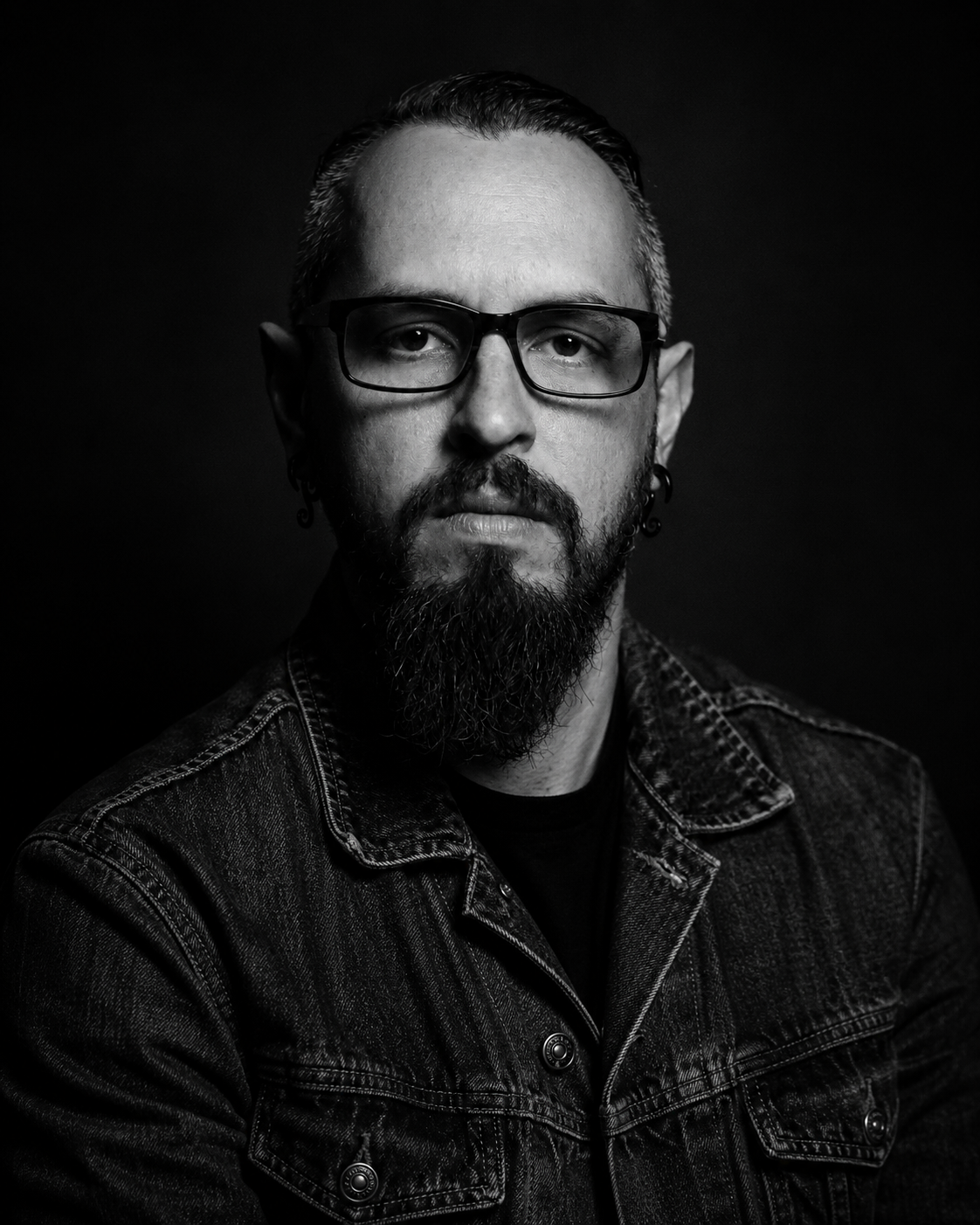
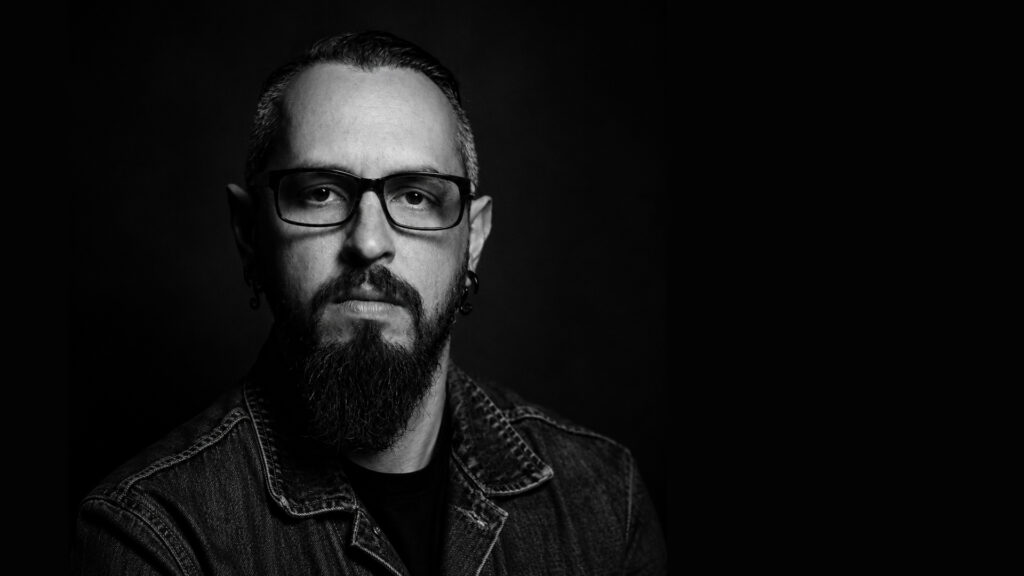
I created Studio Nereus. Because we know that culture is not built in a vacuum nor in naive exchange; it is forged in tension, in the creative tearing of those who, forced to cross borders or to be traversed by them, decide to transform trauma into their own discourse, into aesthetics, into situated thought, and into collective project.
The arts as living heritage and emancipatory knowledge
The visual arts, cinema, literature, music, photography, design, research, and creative industries constitute, from this perspective, a living heritage that transcends mere entertainment or decoration of the spirit. They are full epistemic practices: they generate horizontal dialogue, produce knowledge rooted in specific territories, and drive economic, educational, and social development from below. They carry the emancipatory and revolutionary character and the capacity to assimilate the wound of colonial imposition in order to reinvent themselves—not as a replica of the centers, but as an affirmation of another reason, mestizo and polyphonic.
Latin America: cultural density and historical debt
Latin America holds one of the greatest cultural riches on the planet. It is land where empires of science, art, and thought flourished—from Mayan mathematics to Inca hydraulic engineering, through ancestral pharmacopoeias and complex cosmogonies—that were systematically crushed by European acculturation, that device of the coloniality of power that Aníbal Quijano described as the hidden matrix of modernity. Yet—and here lies its inexhaustible power—much of that potential was never entirely exterminated: it survives in orality, in textile memory, in syncretic rituals, in agricultural techniques, and in the hybrid practices of the present. Even so, it continues to circulate in fragmented and disjointed form within the international scene, victim of a coloniality of knowledge that continues to relegate its voices to exoticism or folklore.
Three decades of bridge-building: the birth of Studio Nereus
With nearly three decades of international experience in the cultural ecosystem, I conceived Studio Nereus not as a service agency, but as an ethical and methodological platform. Our purpose is to build symmetrical cooperation routes—far from the old center-periphery scheme—that allow artists, institutions, and creative communities not only to meet, but to learn to unlearn hierarchies in order to co-create long-term projects. We take on the challenge of building bridges that do not ignore historical asymmetry, but rather convert it into fuel for genuine collaboration.
A network born in LATAM for the Global South
Studio Nereus is a living network, born in Latin America and projected toward the entire Global South. We are dedicated to designing and strengthening strategic connections between artists, universities, festivals, museums, galleries, publishers, governments, cultural enterprises, and international organizations. We do not work with the logic of unidirectional exchange, but with the ecology of knowledge proposed by Boaventura de Sousa Santos: an ecosystem where academic knowledge, popular art, ancestral technique, community memory, and digital innovation converse on equal footing, with none aspiring to colonize the other.
Cooperation as a tool for integral development
We understand cultural cooperation as a cross-cutting tool for development: economic, educational, and social, but always anchored in cognitive justice and intercultural dialogue as the ethical horizon of our time. That is why every artistic project can open academic opportunities that resignify local knowledge; every festival can generate new industries without dispossessing communities of their identity; every exhibition can initiate an institutional exchange that breaks the monopoly of the great hegemonic centers; every film can bring cultures closer not through exoticism, but through recognition of the other as a valid interlocutor with full right to narrate themselves; and every residency can become the beginning of a collaboration that transcends generations, weaving alliances that do not seek to fuse differences, but to articulate them in a common project.
Making encounters possible
Our work, in essence, consists of making those encounters possible. Not from naive utopia, but from the patient craftsmanship of cultural management: designing itineraries, dismantling bureaucratic barriers, translating institutional languages, and above all, listening to the deep needs of those who create from the margins. Because we are convinced that the next great cultural movement of the 21st century will not be born in the metropolises of the North, but in the crossings, borders, and peripheries that—once again, and as they have done for five centuries—will transform the pressure of history into the unpredictable freedom of art and thought.
Studio Nereus is, simply, the tool for that spark to find its network.