
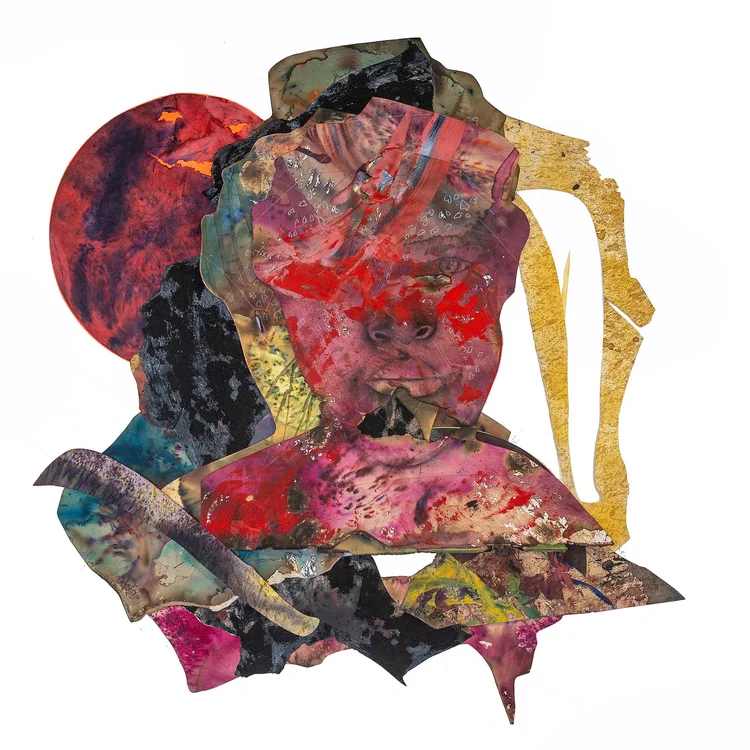
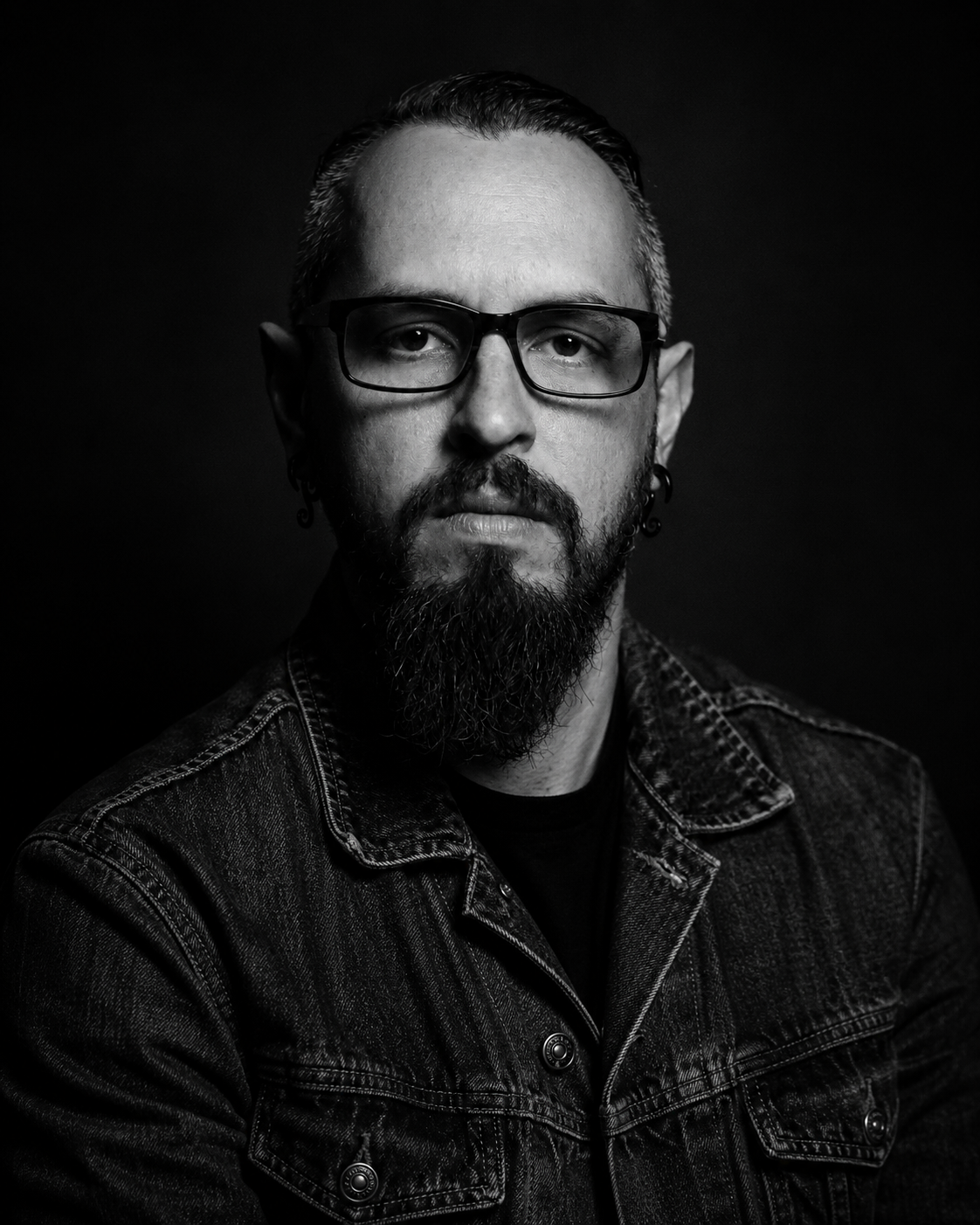
In the Haitian artistic tradition, the sacred and the everyday have always danced together in a single ceremony. From the vevés of Vodou traced with cornmeal on the earth to the vibrant markets of Port-au-Prince, Haitian art has been an exercise in transmutation: turning the mundane into an offering, pigment into prayer. Stephen Arboite, a multidisciplinary artist of Haitian descent born in 1987 and based between New York and Miami, embraces this heritage with a consciousness that transcends mere aesthetic appropriation to delve into the realm of the ritual. His work does not merely represent Afro-Caribbean spirituality; it performs it as a performative act where every material—coffee, charcoal, earth—becomes a vehicle for ancestral memory that refuses to be forgotten.
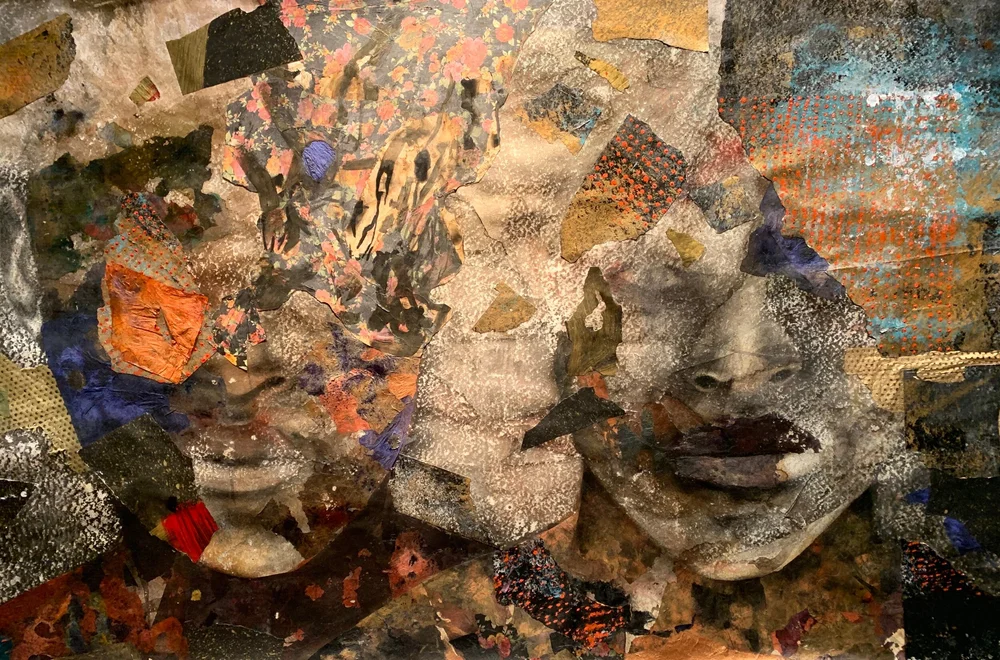
Arboite constructs his visual language from a fundamental premise: materials are not neutral. Coffee, the central element of his practice, is not for him a simple economic substitute for acrylic paint—as it was in his early days when, as a student at the State University of New York, he found himself without resources to complete an assignment—but rather a medium charged with historical and spiritual density. Haiti was, during the 18th century, the producer of half the world’s coffee, and that bitter bean that colonizers and slaves shared within the same geography of exploitation and resistance now becomes, in Arboite’s hands, a pigment of symbolic reparation.
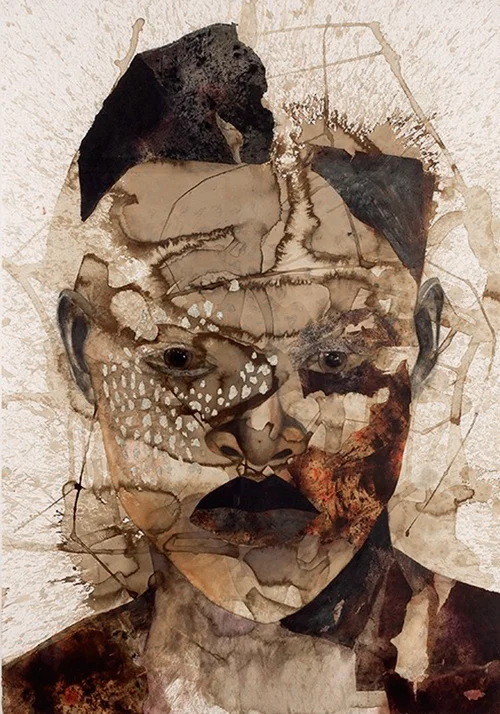
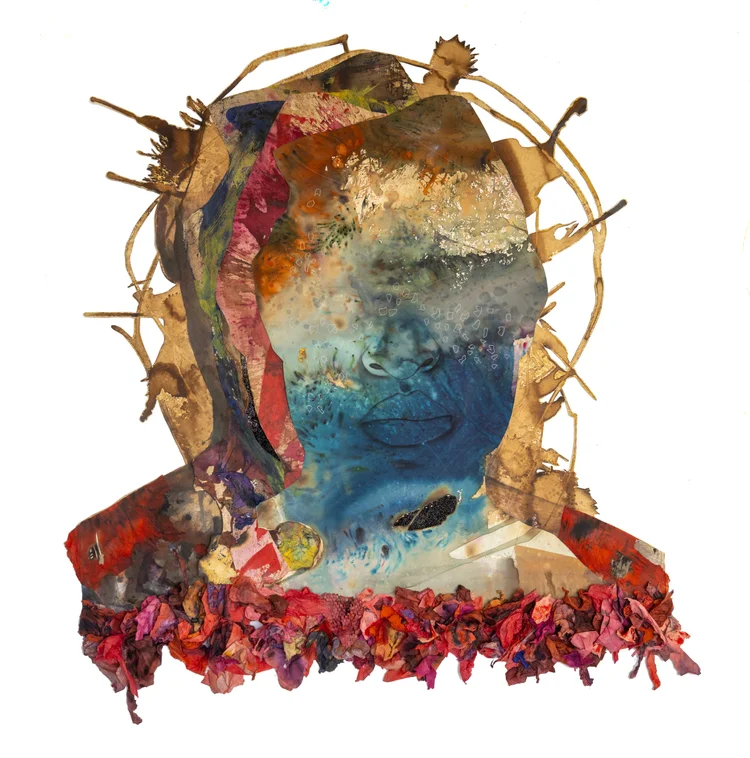
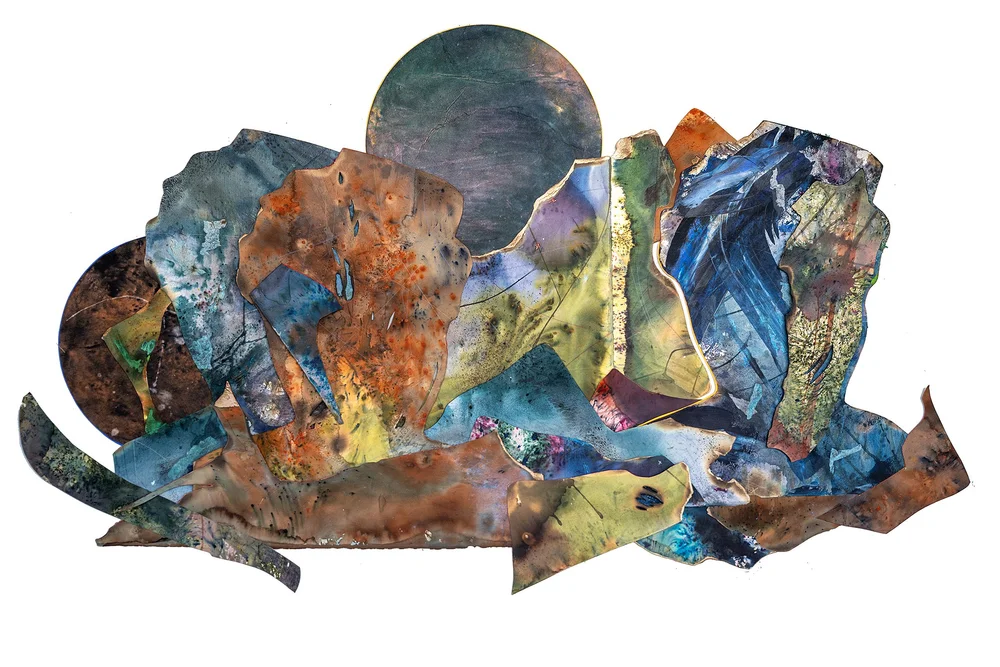
The artist manipulates coffee in all its viscosities—from thick espresso to the golden smoothness of cold brew—to obtain a sepia palette that evokes both the reddish soil of the Haitian mountains and the tone of skin and blood. But he does not stop there. He accompanies the coffee with charcoal made from Haitian trees, adobe-colored earth collected from the island’s mountains, organic pigments, and tinted tissue paper. This obsession with raw materials is not a folkloric gesture; it is an ontological declaration. As Arboite himself points out: “All these materials I use have a certain weight, power, and energy. I believe it is deeper than what is on the surface.”
What distinguishes Arboite from other artists of the diaspora is his ability to turn scarcity into liturgy. The reuse of materials—test papers, discarded fabrics, coffee grounds—does not respond to a superficial ecological ethic, but rather to a profoundly Haitian worldview: “Being resourceful speaks to the spirit of the Haitian community. When times got tough, they had to be creative.” In this phrase resonates an entire history of resistance, where creativity is not a luxury but an act of survival and, by extension, of dignity.
The Ritual of Staining: Spirituality in Process
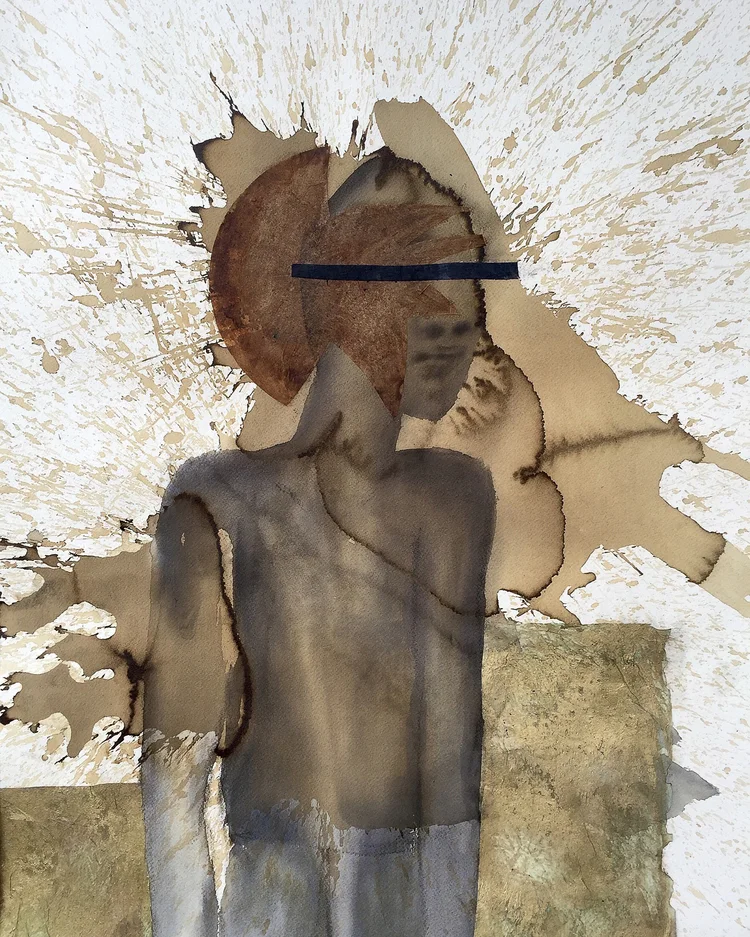
If there is one concept that defines Arboite’s practice, it is that of process as ritual. The artist does not paint on the surface; he inhabits it. He places the paper on the floor and lets gravity—that force both earthly and cosmic—compose the initial layers as he pours and splatters coffee. This gesture, reminiscent of the ritual libations of Vodou ceremonies, transforms the creative act into an invocation. It is not the artist who controls the image; it is the image that emerges from the interaction between material, time, and chance.
This staining technique, which Arboite employs with coffee, metallic powders, and organic pigments, produces ethereal figures that oscillate between abstraction and the fragmented portrait. His silhouettes—often androgynous, always enigmatic—are not portraits in the classical sense, but apparitions. As he himself describes them, they are “distant yet familiar faces” that emerge from the process itself, from the coagulation of wet media and the drying of layers. This method recalls the divinatory practices of the African diaspora, where the interpretation of stains—whether in cowrie shells, oil, or coffee—reveals messages from the beyond.
Critic George N’Namdi, upon curating Arboite’s exhibition Big Good Angel at the N’Namdi Center for the Arts, observed that “while spirit is primarily manipulated in African spiritual practices, his artworks perform a ritual that allows the aura to be seen up close.” This distinction is crucial: Arboite does not illustrate spirituality; he makes it visible. His paintings are windows into a world where the immaterial acquires texture, where the aura—that elusive concept for Western aesthetics—materializes in sepia and charcoal.
The Afro-Caribbean Visual Language: Synthesis and Transcendence
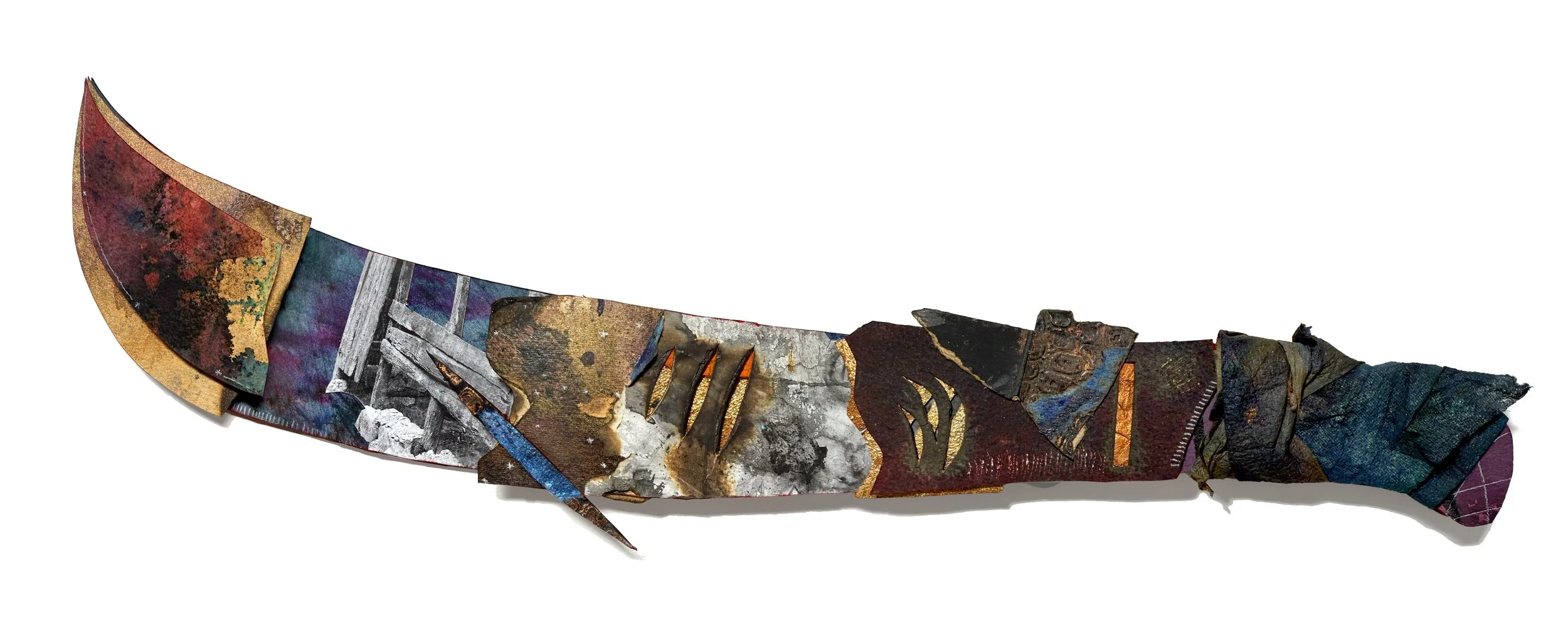
Arboite’s work is part of a tradition that we might call Afro-Caribbean not only because of its geographic origin but because of its visual syntax. Haitian art, from the primitives of the Port-au-Prince Art Center to the contemporary artists of the diaspora, has always been an art of synthesis: African, Taíno, and European merge into an iconography that is at once syncretic and profoundly original. Arboite inherits this synthesis but radicalizes it, eliminating narrative figuration to venture into a more abstract, more psychological space.
His subjects—silhouettes of dancing figures from Kanaval, human forms that seem to emerge from a dream, symbols of Haitian popular culture—are not literal representations but evocations. Kanaval, that explosion of masks, music, and spiritual possession, becomes in his hands a language of stains and contours, where what matters is not the detail of the costume but the energy of the movement, the vibration of the body possessed by rhythm. This ability to suggest rather than describe is what brings his work closer to poetry and music, those arts of time and duration that have so marked Caribbean culture.
Arboite himself defines himself as an artist of “spiritual transformation and evolution of human consciousness.” His works, which he titles with concepts such as Metamorphosis or Portal, are not static objects but thresholds—places of passage from one state of being to another. This obsession with transformation resonates with the very history of Haiti, a nation born of revolution, of the metamorphosis of slaves into citizens, of colony into republic. But Arboite does not remain in historical epic; he transfers it to the intimate plane, to the personal journey of self-knowledge, to that “navigation of a healing path for myself and for others who long for a greater sense of self.”
Conclusion: Coffee as Prayer
Stephen Arboite offers us, in his practice, a fundamental lesson for contemporary art: the possibility that the visual language is, above all, a living language. His materials are not inert pigments but substances with memory—coffee that remembers the plantation, charcoal that retains the form of the Haitian tree, earth that contains the minerals of the mountains of his heritage. In using them, Arboite does not simply paint; he invokes.
His work reminds us that Afro-Caribbean art is not a style or a trend, but a way of being in the world, an epistemology that challenges the modern separation between matter and spirit, between the profane and the sacred. At a moment when global art tends toward dematerialization and pure concept, Arboite returns us to the elemental: to gesture, to the stain, to residue. And in that return, he offers us not only beauty—which there is, and plenty of it—but also a possibility of healing. Because, as he himself says, coffee is for him “a spiritual medium used to emit scenes from my psyche.” And by sharing those scenes, he invites us all to participate in that ritual, to sit around the steaming cup and listen to what the coffee—that beverage so everyday and yet so transcendent—has to tell us.
Leave a Reply